Immigration Information
IELTS Language Test
For individuals contemplating immigration to pursue studies, work, or residence in foreign countries, a valid language certificate is often a prerequisite.

The IELTS certificate is a crucial document required when entering universities and English-speaking nations. Recognized by approximately 10,000 organizations globally, the IELTS test assesses individuals’ proficiency in the English language.
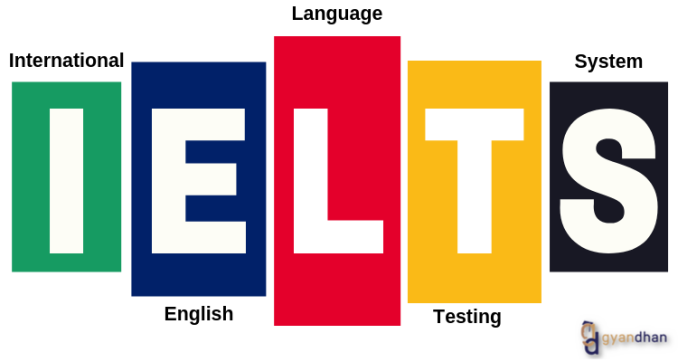
The IELTS test, an abbreviation for the International English Language Testing System, is a highly valid English language assessment conducted worldwide. It is a British test, placing it on par with TOEFL, an American test. Organized by the University of Cambridge, the British Cultural Council, and the Australian IELTS Center, it boasts the highest international standard for English language evaluation.
The IELTS test evaluates participants in four key skills: Listening, Reading, Writing, and Speaking.
Note: An IELTS language certificate is acceptable for internal exams, such as specialized doctorate or medical bachelor’s exams requiring a language certificate for registration and passing.
Listening Section
Time: About 40 minutes
Number of questions: A booklet with forty questions in 4 sections
Assesses the candidate’s ability to understand conversations, scattered details, and various topics through listening.
General Training Reading Section
Time: 60 minutes for 40 questions
Involves reading texts without additional time for transferring answers. Texts cover daily social affairs, educational pamphlets, welfare needs, and a long text with a general topic.
Academic Reading Section
Time: 60 minutes for 40 questions
Requires reading three scientific and academic texts. No extra time for transferring answers is provided.
General Training Writing Section
Time: 60 minutes
Involves writing for two topics: a letter (Task 1) and an opinion essay (Task 2). Allocate 20 minutes for Task 1 and 40 minutes for Task 2.
Academic Writing Section
Time: 60 minutes
Involves writing for two topics: explaining a table or graph (Task 1) and an opinion essay (Task 2). Allocate 20 minutes for Task 1 and 40 minutes for Task 2.
Speaking Section
Time: 15 to 20 minutes
Includes three parts: answering general and personal questions, speaking on a Topic Card, and discussing the topic from the second part with the interviewer.
Scoring of the IELTS Test
The scoring system ranges from 0 to 9, reflecting the individual’s level of language proficiency.
There is no “passing score,” but scores are valued based on expectations. A score of 5 is considered average, while 6 and above are considered good.
Result Announcement
Results are usually announced two weeks after the speaking part concludes. The validity of the results is two years, and universities do not accept IELTS scorecards older than two years.


